After two decades of inconclusive wars in greater Middle East, Americans understandably want to turn inward. The traditional lure of isolationism is once again being felt, while a new aggressive unilateralism dominates our current foreign policy. Many believe that the US has expended much and gotten little from the outside world.
But it is worth remembering that foreign engagement is not actually very expensive. Our entire foreign affairs apparatus, that is: foreign assistance, support for international agencies, and all our embassies and consulates abroad amount to about one percent of the budget [https://www.pgpf.org/article/how-much-does-the-government-spend-on-international-affairs/]. If we completely cut ourselves off from the world, we would only save enough to run the Department of Defense for less than two days.
While diplomacy is cheap, wars are expensive. The ‘Global War on Terrorism’ cost the United State about $8 Trillion [https://watson.brown.edu/costsofwar/papers/summary]. When I was running our civilian assistance programs in Afghanistan, DoD’s contracting costs for the war were larger than the entire Afghan economy, and orders of magnitude larger than the money we put into building schools and clinics for the Afghan people. By contrast, the cost of peaceful engagement is actually quite small.
But these modest investments we have made in foreign engagement over the past 80 years been highly beneficial to the American people. Despite ups and downs, our economy has thrived especially compared to our principal competitors. We have built an international system that largely reflected traditional American preferences for worldwide economic growth, democracy, and human rights. The gains have been impressive, if uneven. Western Europe and much of East Asia were shattered places in 1945; now they are thriving economically and mostly democratic. Africa has shaken off colonialism and its increasingly educated population is moving into middle class status. Latin America has largely gotten past its propensity for military rule and is now mostly democratic and becoming more prosperous. This rising tide of prosperity has benefited the United States, which continues to have the world’s largest economy and be the center of global innovation.
Most important, there has been no global war and no military confrontation between great powers since the Second World War. And in the wars that have taken place the US has benefitted from having allies who are willing to shed blood and expend treasure when we have needed it. The only time the NATO alliance has ever invoked its mutual self-defense article was after 9/11, in favor of the United States.
But these advancements will be at great perils if the United States turns inward.
It is a rule of international politics that one great power has to take responsibility for maintaining the system. If the US relinquishes that duty someone else will step in. In the current international environment, the someone else is likely to be the communist party of China. It is hard to see how a world with China in charge would benefit the United States or our belief in democracy and free markets.
The Forward Party believes in American Leadership, but not necessarily a leadership that translates to being the world’s policeman. An adequate defense is necessary in a dangerous world, but many international problems can be addressed much more cheaply by diplomacy before military action becomes necessary.
Most of all, Forward believes that we need a national discussion about America’s role in the world. We need to discuss and debate how much the US has gained from the system of international organizations and alliances it has built, and how much it stands to lose by cutting itself off from allies and partners around the world. America certainly has domestic problems that need to be addressed urgently, but it will be easier to do so from a position of international strength rather than isolation. It is good to have friends. And at the Forward Party, we believe we can and must make friends everywhere we can, at home and abroad.
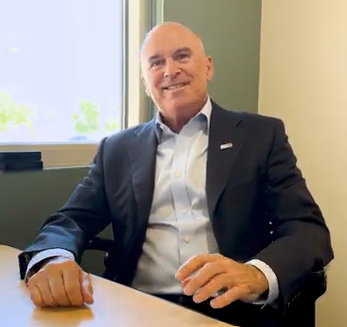
Richard Olson is a retired foreign service officer, having served as US Ambassador to the United Arab Emirates, Pakistan and as Special Representative for Afghanistan and Pakistan. He is a member of the Executive Committee of Forward New Mexico.
Disclaimer: this opinion is that of the author, not of the Forward Party of New Mexico. The Forward Party is dedicated to educating the public about many public policy options to reform our system of governing and deliver better services at a lower price. We do not have a fixed platform, but our leaders and candidates have much in common and that is a desire to work together, listen well and solve wicked complex problems that neither major party is effectively addressing.